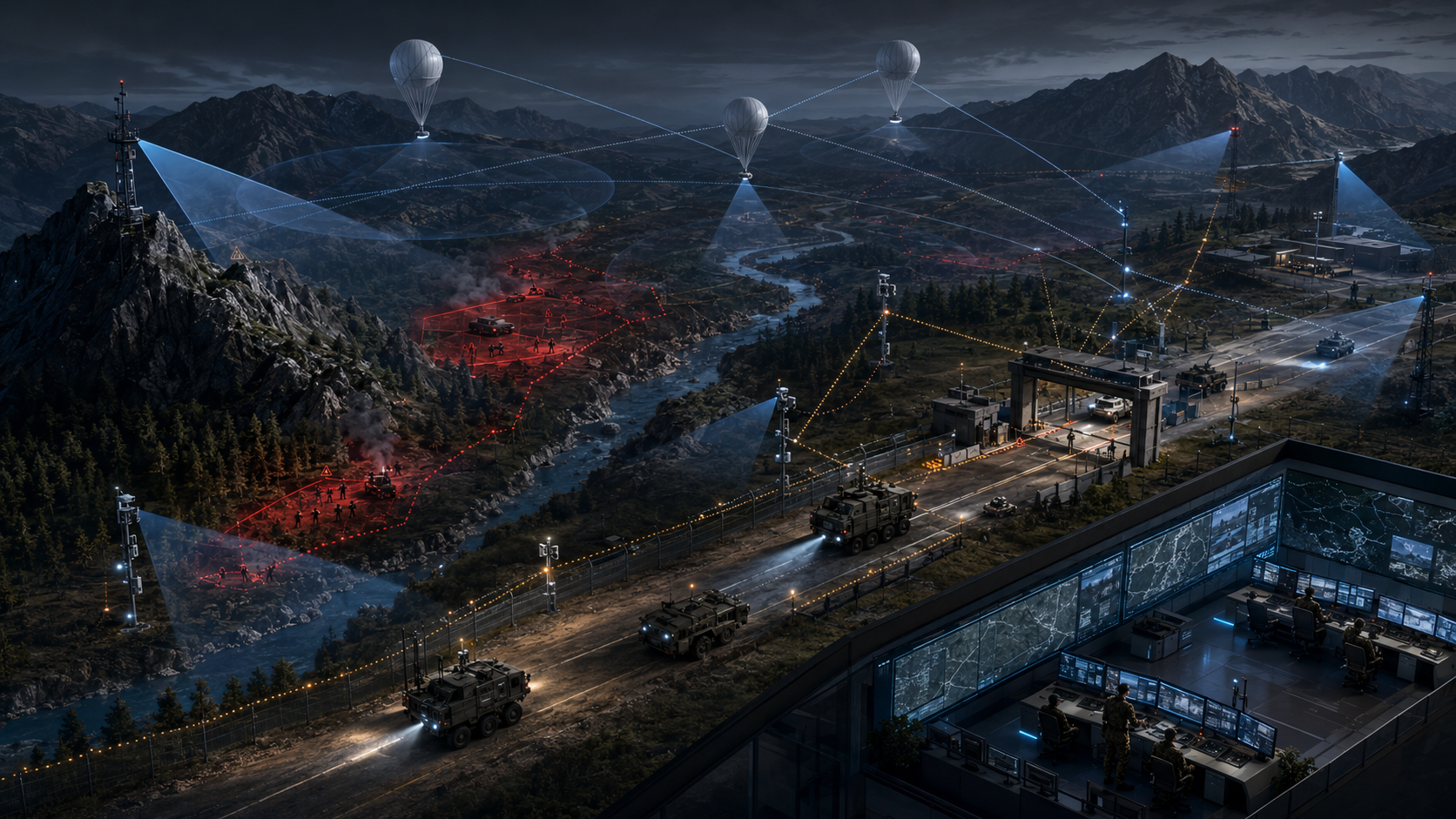
Multi-layer Border Defense Platform
The platform is designed to avoid dependence on a single checkpoint or camera layer. It combines multiple sensing and operational layers so agencies can maintain a broader border picture, identify abnormal events, verify location and context, and coordinate an appropriate field response.
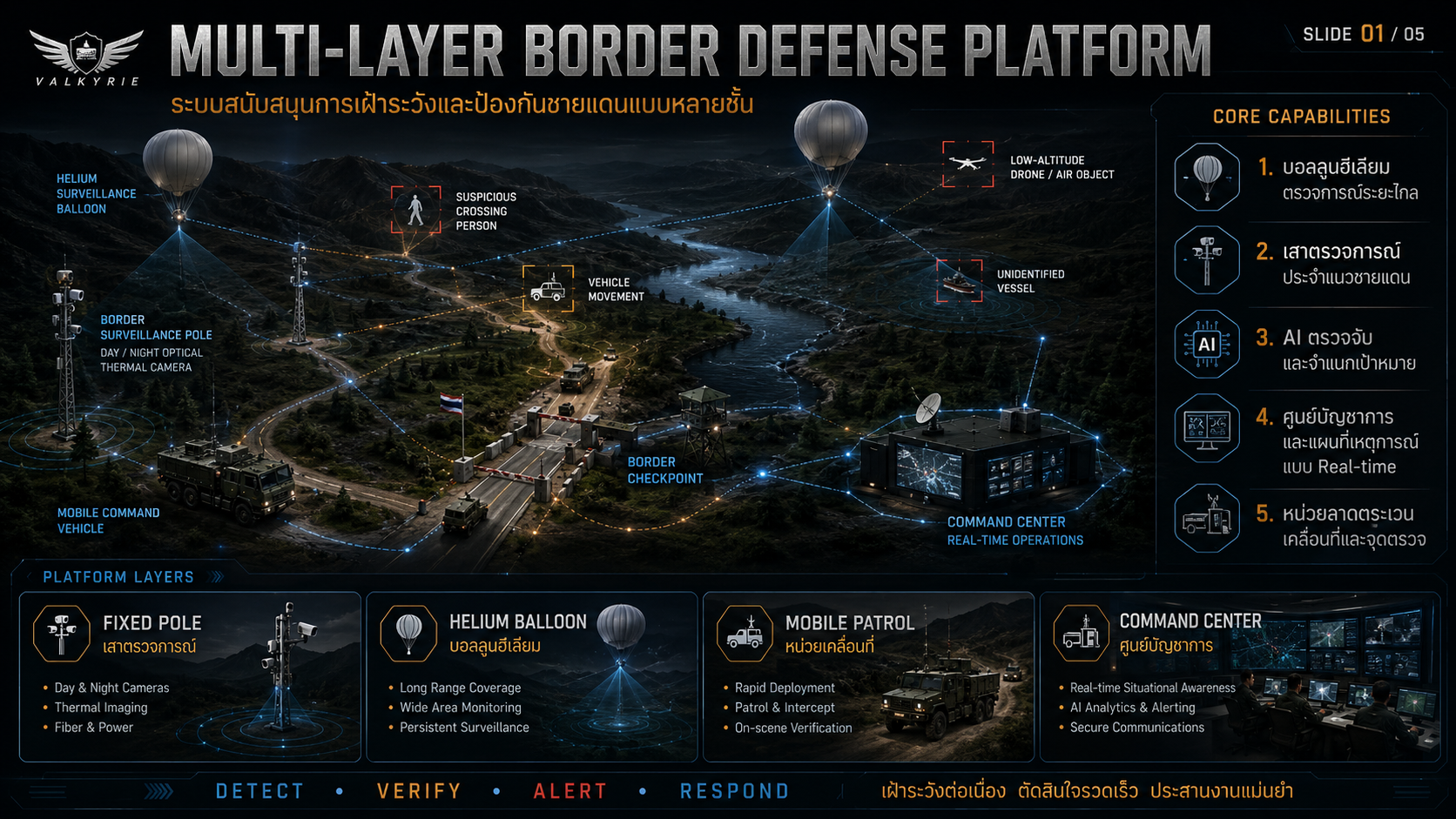
Fixed Border Observation Posts
Supports optical, PTZ, telescope, and thermal cameras for permanent checkpoints, border crossings, roads, passes, and other monitored areas.
Long-range Helium Balloon Surveillance
Adds an elevated observation point to reduce terrain blind spots and can provide communication-relay support in remote areas.
AI Detection & Risk Scoring
Assists with detection and classification of people, vehicles, boats, drones, and unusual activity, with configurable risk prioritization.
War Room & Real-time Map
Combines imagery, coordinates, time, and incident information on a shared map to support command decisions and multi-agency coordination.
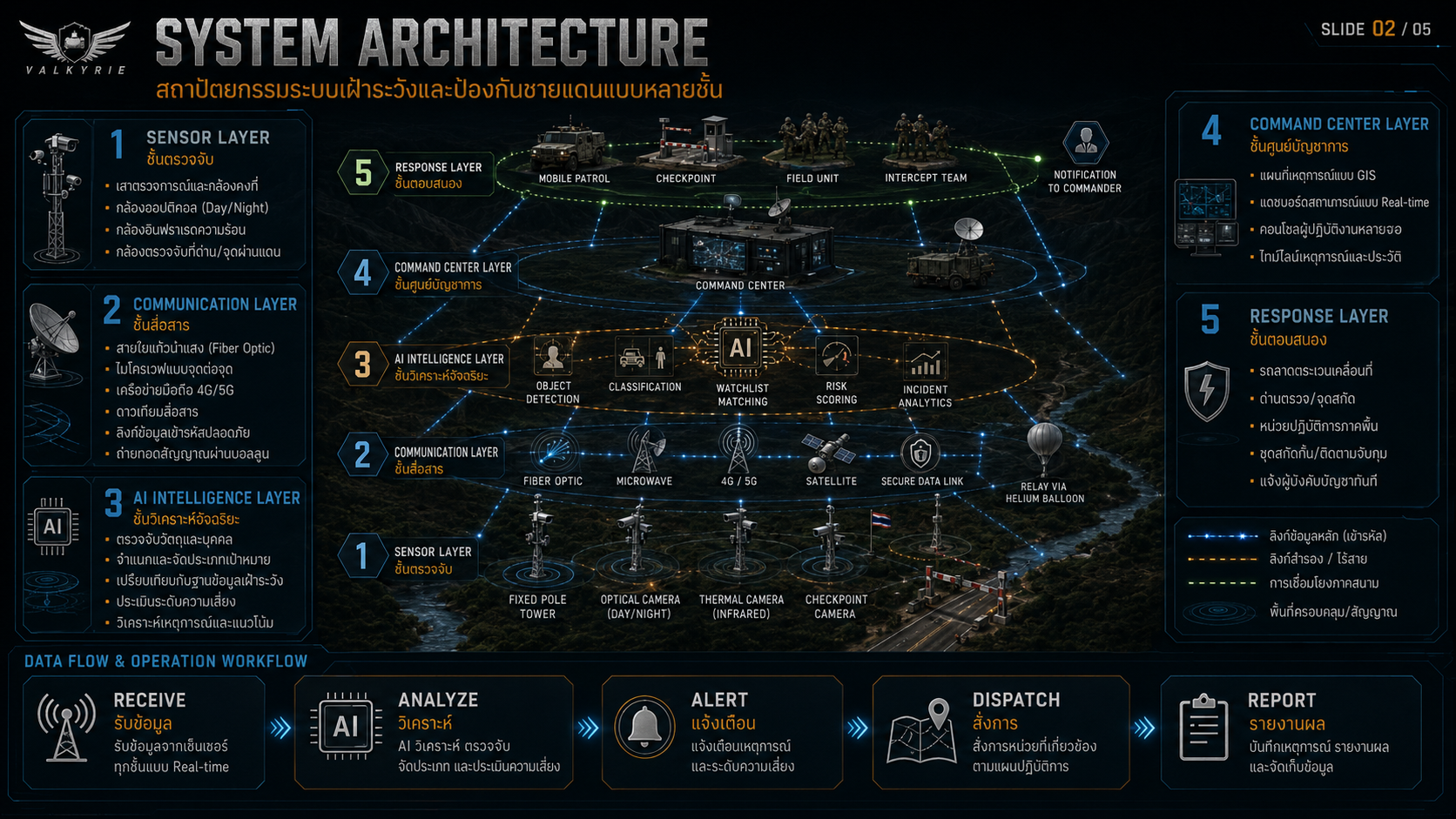
Multi-layer Border Surveillance Architecture
The architecture is organized into five connected layers, from sensing and communications through analysis, command-center operations, and field response, creating a traceable operational workflow.
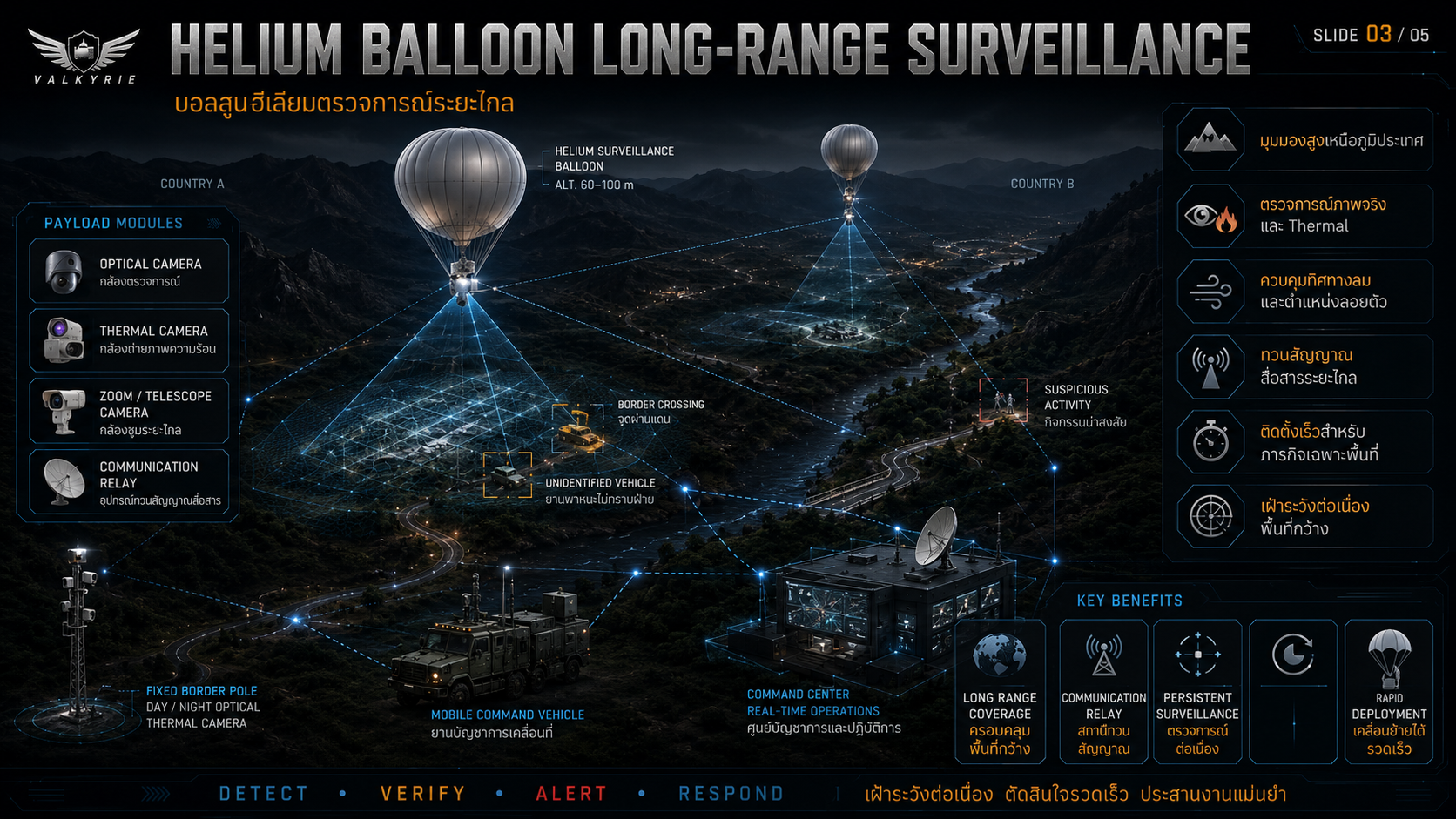
Long-range Helium Balloon Surveillance
The balloon layer raises sensors above terrain and local obstructions to extend line of sight, reduce blind spots, and support communication relay for selected operational areas.
- Elevated observation for forests, mountains, rivers, and border-crossing areas.
- Supports optical, thermal, zoom, and telescope-camera payloads according to project design.
- Can support communication relay between observation posts, checkpoints, patrol vehicles, and the command center.
- Can be deployed for temporary monitoring, planned events, or selected high-priority areas.
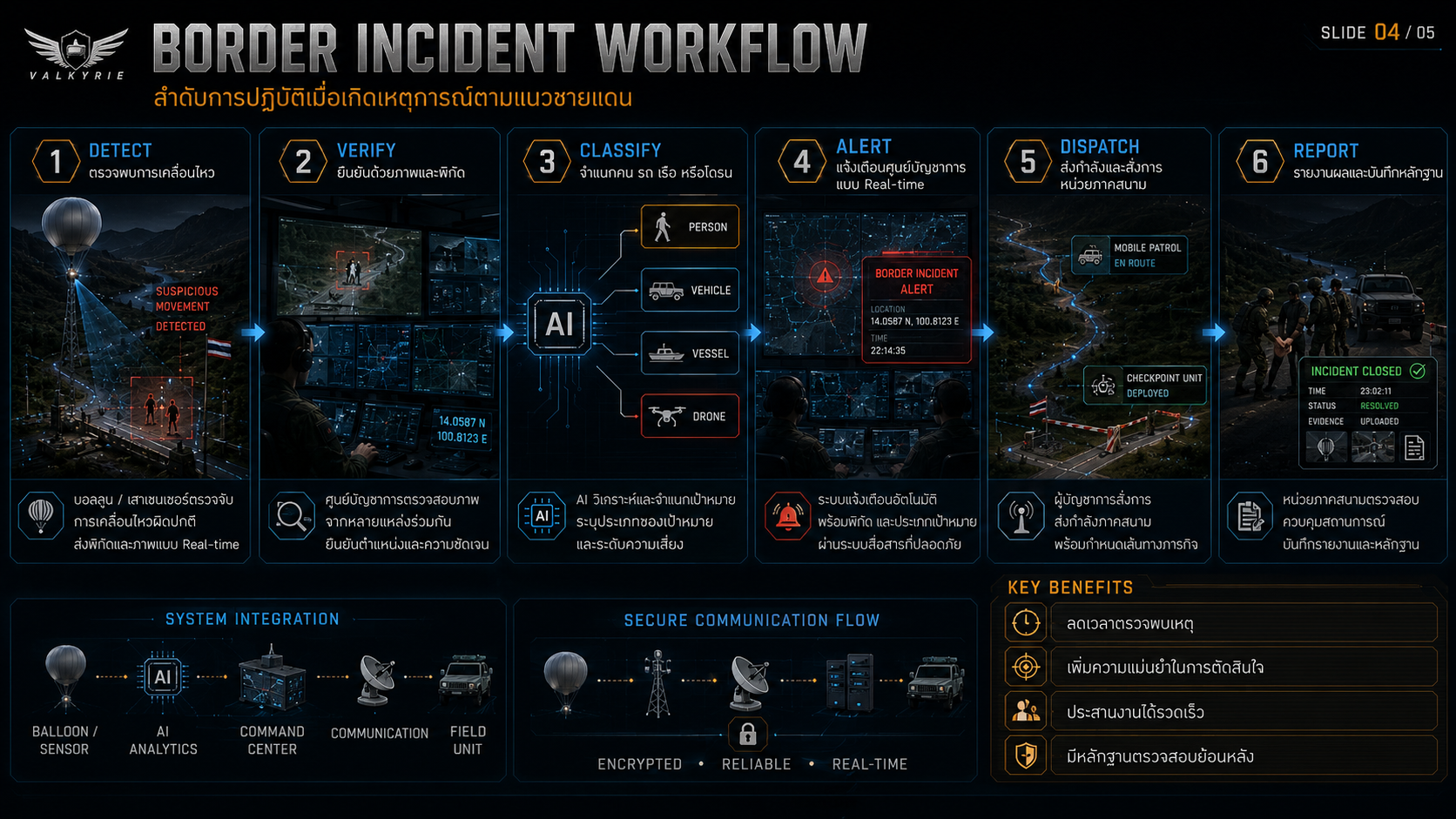
Operational Workflow for Border Incidents
The platform converts passive monitoring into a structured workflow covering detection, verification, classification, alerting, task assignment, and incident recording.
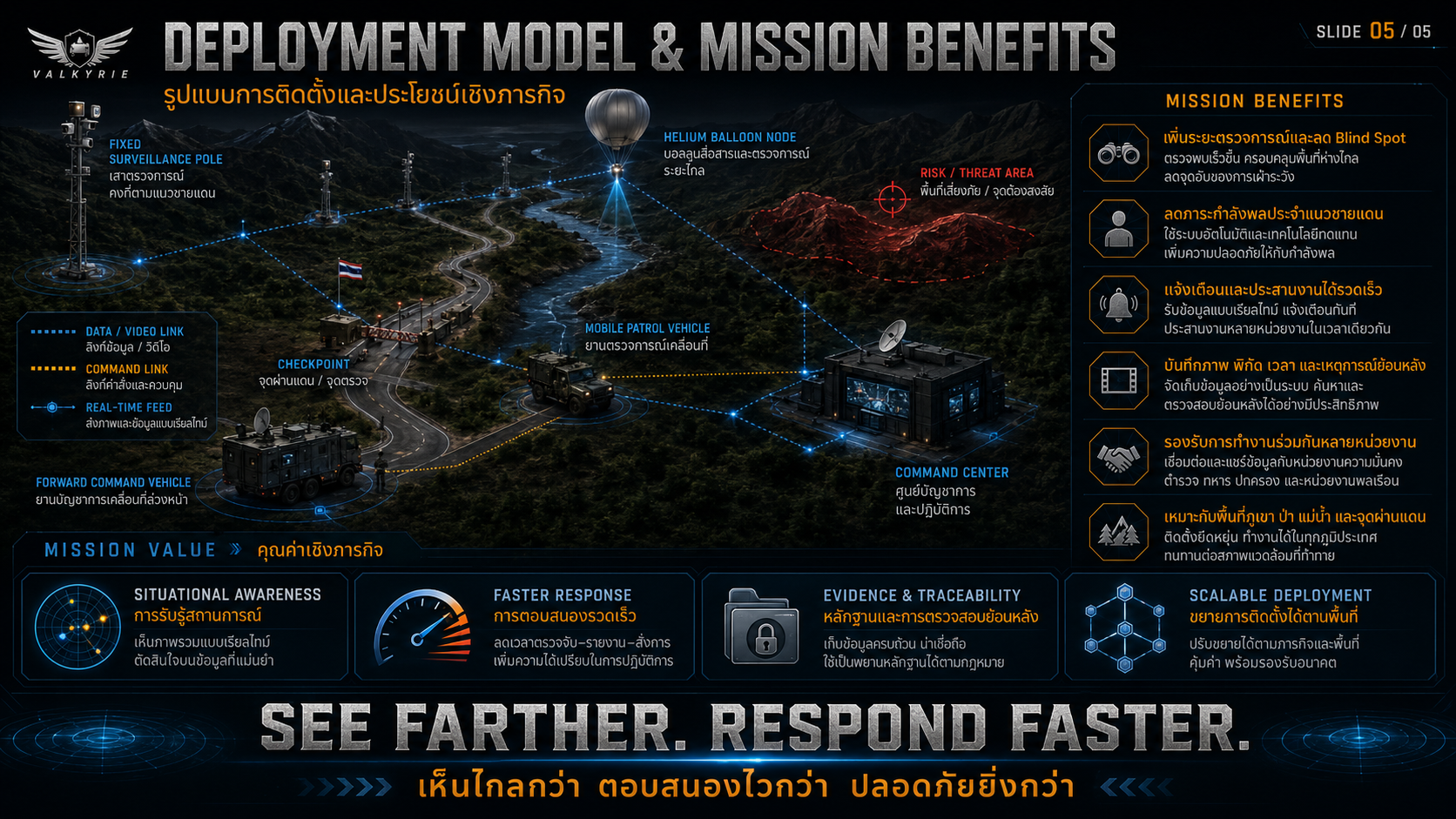
Deployment Models and Operational Benefits
The platform can support permanent border areas, strategic checkpoints, temporary monitoring zones, and complex terrain while connecting field information to a common command environment.
Mission Value
- Extends observation coverage and reduces selected terrain blind spots.
- Reduces routine monitoring burden and improves operator safety.
- Supports faster alerting and multi-agency coordination.
- Creates structured records of imagery, location, time, and incidents.
- Supports coordination among authorized security, administrative, and civil agencies.
- Applicable to mountain, forest, river, pass, and border-crossing environments.
Platform Presentation Series
A visual presentation set for web pages, proposals, presentations, and brochures describing the Border Defense Support Platform at a system-concept level.
See Farther. Respond Faster.
Designed around real operational environments with support for fixed observation sites, mobile units, elevated surveillance nodes, secure communications, and centralized situational awareness.